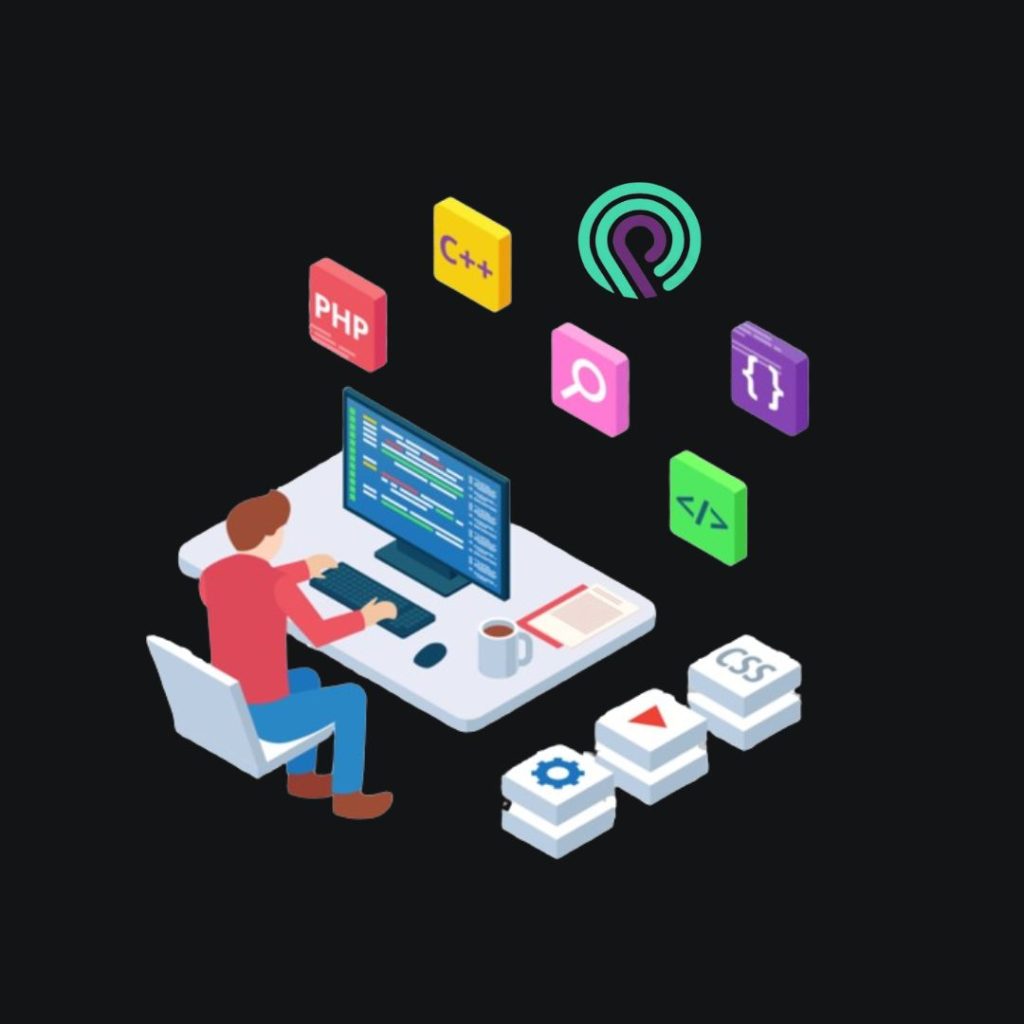
A full stack website is a comprehensive web application that involves both the front-end (client-side) and back-end (server-side) development.
Full stack development refers to the ability to build and manage all aspects of a web application, from designing the user interface to handling the database, server, and application logic. A full stack developer has the skills to work on every layer of a web application.
Key Components of a Full Stack Website:
- Front-End (Client-Side):
- User Interface (UI): The visual elements of the website that users interact with, including layouts, buttons, forms, and other interactive components. Technologies like HTML, CSS, and JavaScript (often enhanced with frameworks like React, Angular, or Vue.js) are used to create the front-end.
- Responsive Design: Ensures that the website looks and functions well across different devices, such as desktops, tablets, and smartphones. This is achieved using CSS frameworks like Bootstrap or Tailwind CSS.
- Back-End (Server-Side):
- Server: Handles requests from the client-side, processes them, and sends back the appropriate data. Common server-side languages and frameworks include Node.js, Python with Django or Flask, Ruby on Rails, or Java with Spring.
- Database: Stores and manages the data that the website uses and generates. Databases can be relational (like MySQL, PostgreSQL) or non-relational (like MongoDB). The back-end connects the database with the front-end, allowing for data retrieval, storage, and manipulation.
- APIs: Application Programming Interfaces (APIs) are used to enable communication between the front-end and back-end, or to integrate third-party services (like payment gateways, social media platforms, etc.). RESTful APIs and GraphQL are common approaches.
- Full Stack Development:
- Integration: A full stack website seamlessly integrates the front-end and back-end, ensuring that user actions on the client-side result in the correct operations and data handling on the server-side.
- Security: Full stack developers implement security measures to protect the website from vulnerabilities, such as encryption, authentication, and secure API practices.
- Version Control: Tools like Git are used to manage and track changes in the codebase, allowing for collaboration and rollback if needed.
- Deployment and Hosting:
- Web Hosting: The website is hosted on a server that makes it accessible to users via the internet. Full stack developers may also manage cloud services (like AWS, Azure, or Heroku) for hosting the application.
- Continuous Integration/Continuous Deployment (CI/CD): Automates the process of testing and deploying updates to the website, ensuring that new features or fixes are delivered efficiently.
- Maintenance and Scaling:
- Ongoing Maintenance: Regular updates, bug fixes, and performance optimization are essential to keep the website running smoothly.
- Scalability: The website is designed to handle increasing traffic and data load as the business grows, using techniques like load balancing, database optimization, and microservices architecture.
A full stack website provides a complete solution, handling everything from the visual user experience to the behind-the-scenes processing and data management, making it a robust and versatile application for businesses or personal projects.